
Farming + Wildness
On 26 years of movement building as President and co-founder of the Wild Farm Alliance

“A good farm is one where native flora and fauna lose acreage without losing existence.” — Aldo Leopold, Biotic Farming
“Farming with the wild” is a beautiful dream. Farms and ranches braided by natural habitat connected across vibrant landscapes. Lately I’ve been tracing my personal path to this idea. After 26 years as co-founder and board president of the Wild Farm Alliance, it’s time for me to pass the baton. Yet the synthesis of farming and wildness is never far from my mind.
In the early 1990s, I made many journeys across California studying cotton production with my good friend, Will Allen (Full Expression Episode 22). At that time, over one million acres of cotton were under cultivation in the state. Will was and still is an organic farmer and the founder of the Sustainable Cotton Project. I was working for the ESPRIT clothing company in what today you might call the sustainability department. In reality, I was an aspiring writer and activist embedded inside the first major company to pioneer the use of organic cotton and other environmentally oriented production innovations.
Will and I were researching cotton farming’s toxic footprint, which was massive and under-reported. We tailed crop dusters, visited cancer clusters, and tracked down health officials. (Later representatives from the J.G. Boswell company, the world’s biggest cotton producer, appeared at the ESPRIT headquarters to confront us about our subversive promotional materials and vaguely threatened to cut off our cotton supply.) On those trips, we sometimes stopped to eat in a podunk Central Valley town with a great Mexican restaurant. I distinctly remember a giant tree just outside of town that was essentially the only nesting habitat for miles around in a moonscape of industrial farming. Almost every single branch had at least one nest on it. And this was supposed to be the Great Pacific Flyway.


Around this same time, I attended a meeting where conservation biologists Michael Soulé, Reed Noss, and Dave Foreman presented their plan for North American Wilderness Recovery at Doug Tompkins’ house in San Francisco. (Doug had originally created my position at ESPRIT). Prairie ecologist and plant geneticist Wes Jackson was also there. The ecological brain trust in that room was staggering. We had conservationists mapping connected wilderness areas across the continent (like Yellowstone to Yukon) and Wes Jackson working toward a self-sustaining perennial agriculture modeled on the prairie ecosystem.
But it was obvious that these inspired visions belonged to two distinct camps. Though they shared many of the same ecological objectives, the conversation was at times defensive and adversarial rather than strategic and collaborative. Wilderness conservation and agricultural reform were definitely not in sync. This was somewhat understandable. Agriculture was and remains a big driver of species extinction around the world. Meanwhile, farmers were being driven off the land due to globalization, consolidation and other economic forces. And yet the rural landscapes that agriculturalists control could provide the necessary habitat connectivity for wilderness recovery.
This was an essential trail to follow. Where in North America—and the world—were farmers and conservationists collaborating at a deep level? How wild could a farm be and still remain economically viable? How much agriculture could take place in a wildway while protecting biodiversity and natural functions like flooding, wildfire, and large carnivore predation?
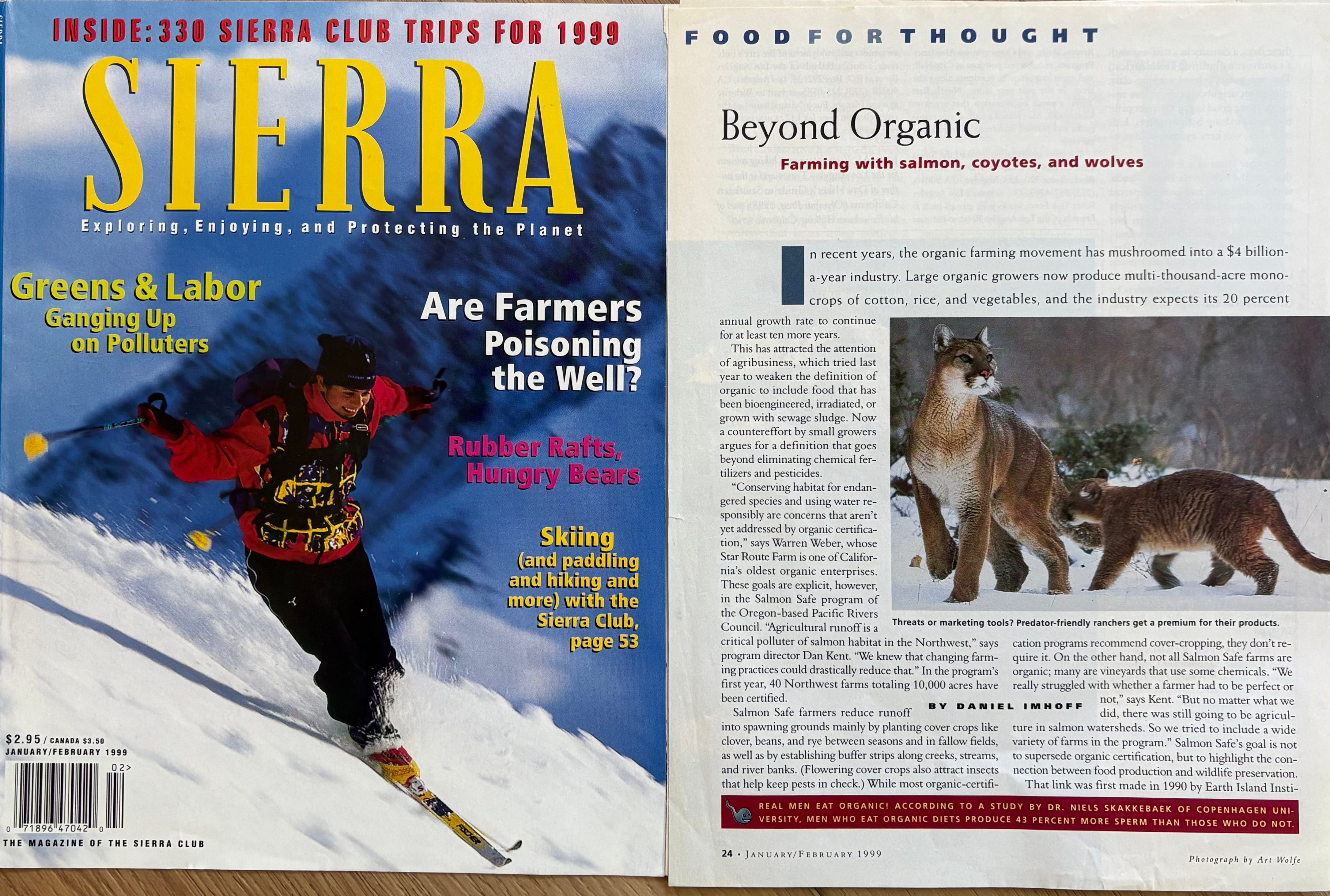
So much was happening in my life at the time. My wife and I purchased a remote homestead with a vestigial apple orchard in California’s Anderson Valley. We began learning first hand about the subjects I was writing about. We soon found out, for example, that black bears frequented our orchard and ate apples by the limb and crumpled deer fence like tin foil. By the late 1990s, I was a freelance writer and published some early pieces about farming with the wild in Whole Earth Review, Sierra Magazine, and Wild Earth featuring emerging examples such as predator-friendly ranching, salmon-safe farming, shade grown coffee and grass banking.
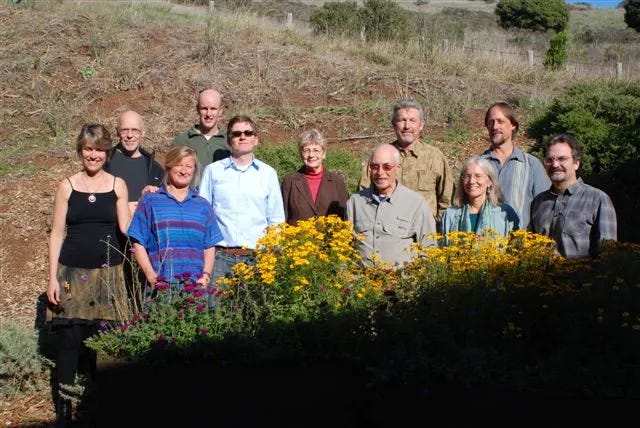
With the support of the Foundation for Deep Ecology, a small group of us—John Davis, Mark Ritchie, Paula MacKay, and myself—organized a gathering in Point Reyes, California, in January 2000. Our express purpose was to create a national organization called the Wild Farm Alliance. We brought together an incredible cross-section of experience: the Smithsonian Institute and EarthFirst!, academics and certifiers, farmers and conservation biologists. Bay Area writer and publishing legend Malcolm Margolin attended. Wendell Berry sent a profound two-page letter offering his thoughts on the endeavor. There were occasional fireworks between the camps, but almost everyone agreed that conservation-based agriculture was a most worthy, if steeply challenging, mountain to climb. Of the original 32 conference participants, 12 of us raised our hands to become co-founders of the Wild Farm Alliance.1
In short time we gained 501(c)(3) status and Jo Ann Baumgartner, who attended in the Point Reyes meeting, became executive director. I initiated a three-year writing project that took me around the country searching for the best examples of individuals and regions working to create healthy agriculture that supported and protected biodiversity. Along with my long time collaborator, Italian photographer, Roberto Carra, we published Farming with the Wild: Enhancing Biodiversity on Farms and Ranches in 2003 (Watershed Media/Sierra Cub Books). It became a launching pad for the new organization and remains my personal favorite of my many book projects.

For the next 15 years, our founding corps along with a star-studded advisory board held regular conversations, organized yearly gatherings, and executed occasional campaigns. No one ever wanted to miss those calls or in-person gatherings because the conversations were so uniquely alive. By 2015 Jo Ann was joined by her right hand collaborator, Shelly Connor, (who will be our co-director this September). They made a powerful tandem that has built a small but mighty team along with impactful programs and the support of growers, scientists, state agencies and funders.
The foundation community was slow to catch up to the importance of biodiversity in agriculture. Frankly, there is still some catching up to do. Because of this, much of our initial work turned inward, amassing on-the-ground, science-based evidence for wild farming. Over the decades, Jo Ann and her team have produced an impressive series of seminal publications, videos, courses and other tools that make practical the case that farming and habitat are not only compatible but ecologically superior and economically viable. We successfully advocated for and trained organic certifiers to include biodiversity considerations in their standards. When industry and agencies blamed on-farm habitat for food safety concerns, we pushed back with the science that debunked the link between field buffers and e.Coli. Today we are leaders in promoting avian-based solutions to pest control. This is a short list.
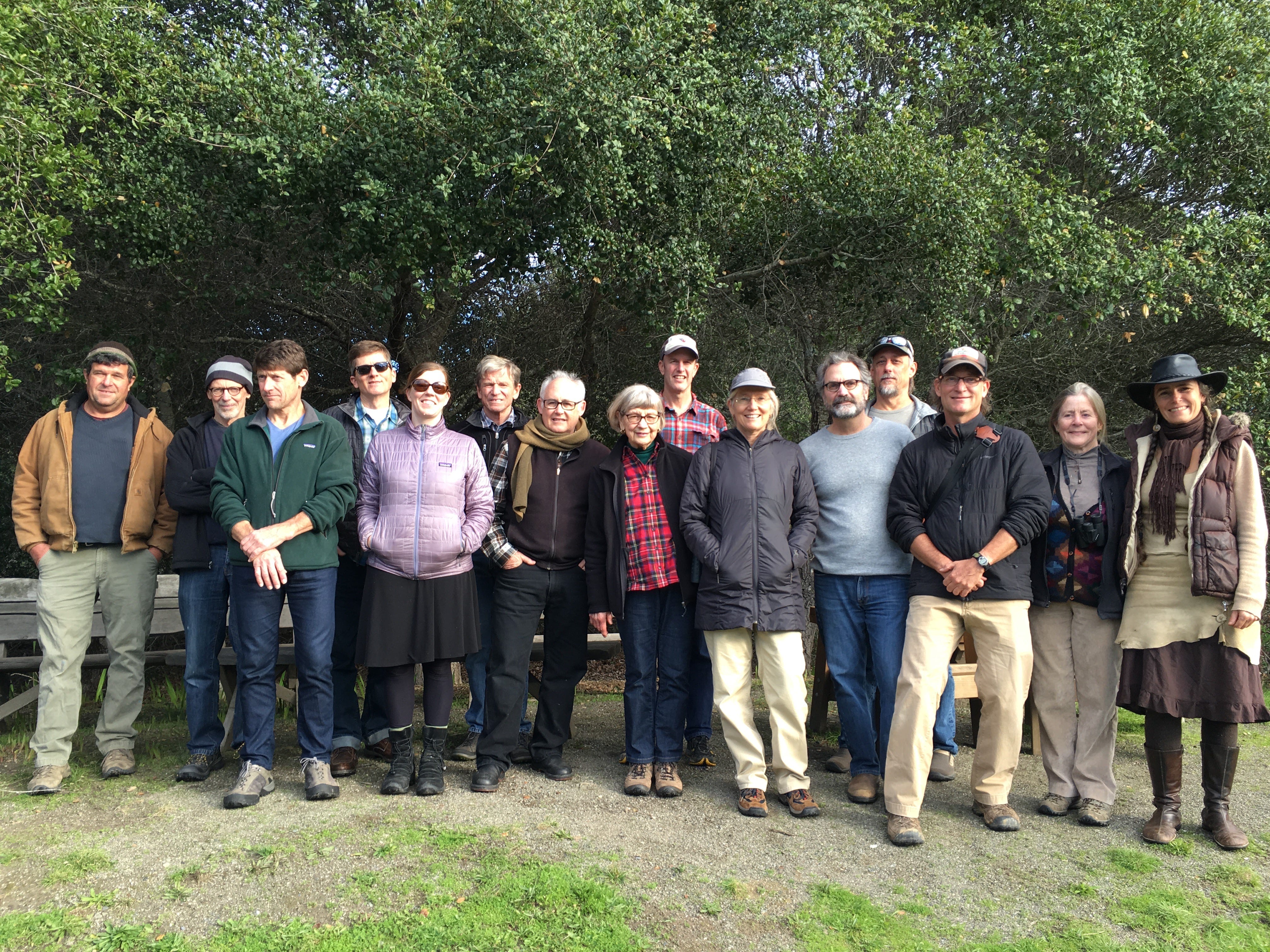
Over a decade ago, at the counsel of our co-founder Dana Jackson, many of our original board members began to step away to make way for a new wave of leadership. This corresponded with a maturing phase of our organization. We’ve continued to evolve a solid foundation of programs along with ambitious yet achievable strategies to amplify our future impact. Our on-farm habitat programs and research—often California focused—are being adapted throughout the country. The board remains the kind of diverse and interesting group of high quality people you want to spend time with.2
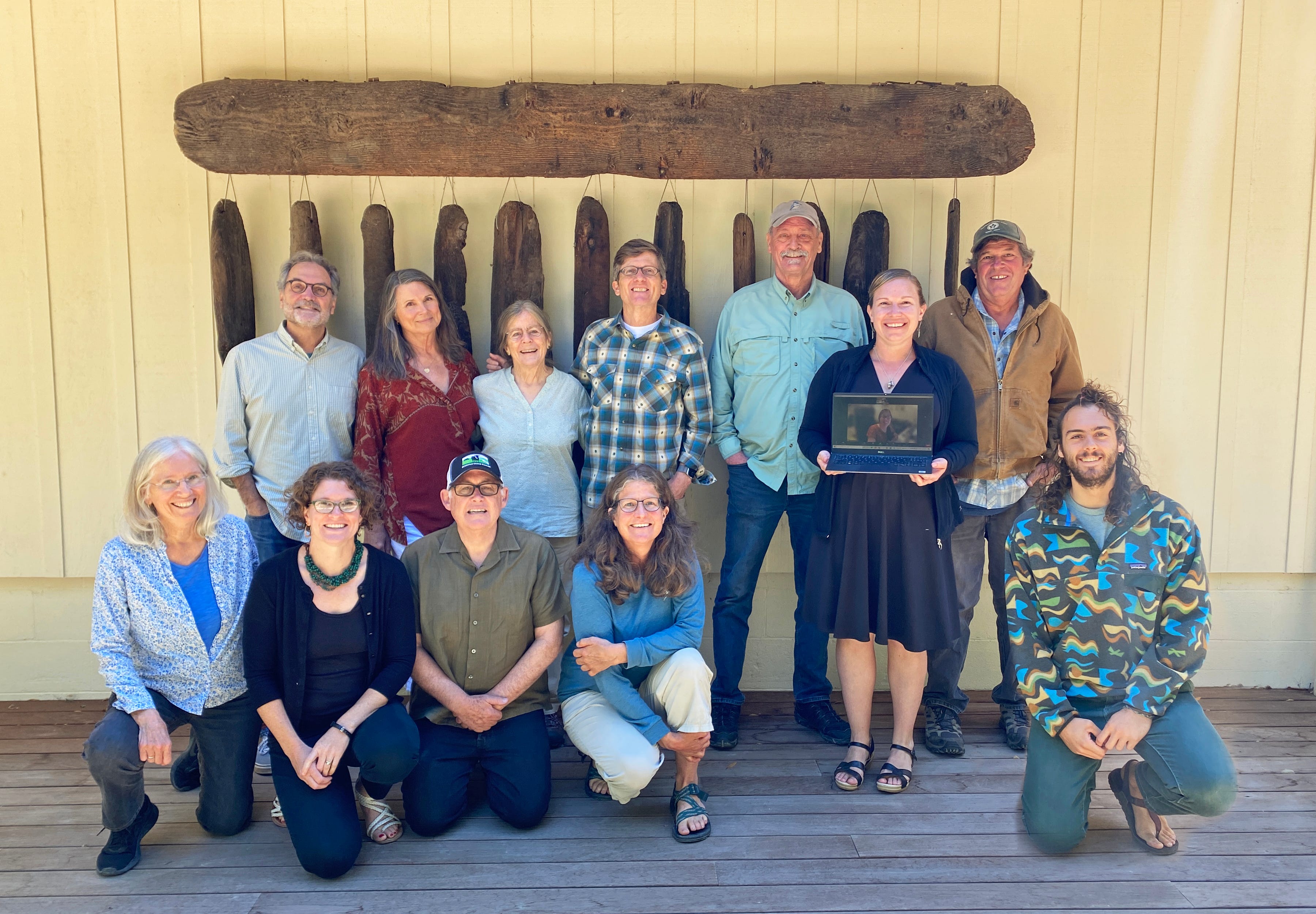
The extinction crisis has only intensified since I began my research three decades ago. Along with the accelerating climate crisis, the present trajectory of industrial agriculture is on shaky ground. I believe that the best solutions to our problems of food production often begin with habitat—making room and accommodating native flora and fauna where farming takes place. We must make farms that fit the landscape rather than vast ecological sacrifice zones. That means inspiring the kind of stewardship culture that Aldo Leopold advocated for nearly a century ago, along with the technical and financial resources for landowners to make it happen. And, of course, growing a lot more support for groups like the Wild Farm Alliance.
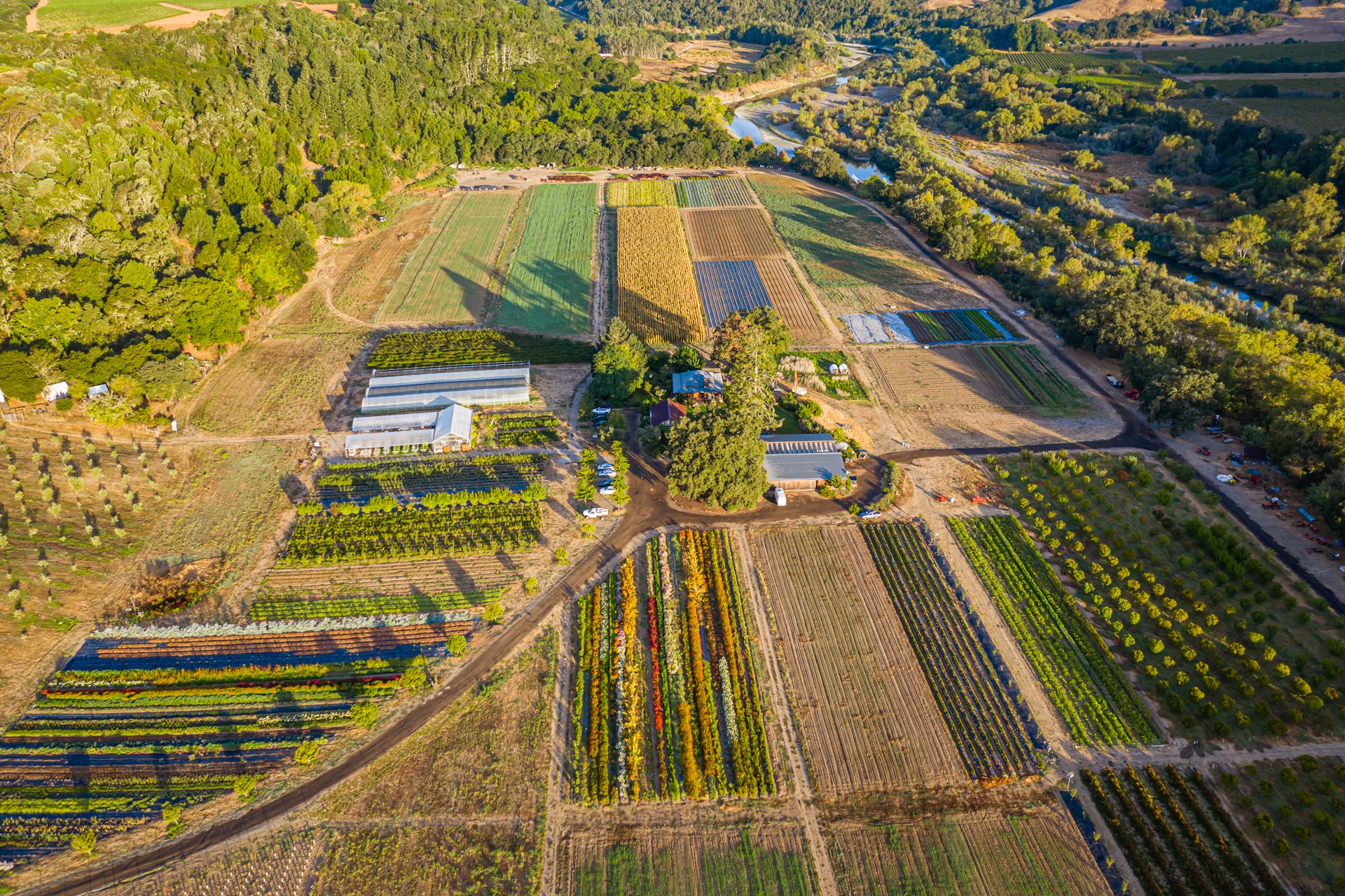
Farming with the wild is a dream within our grasp. How about starting with 1,000,000 bird boxes and nesting perches on farms from British Columbia to Baja and across the former grasslands of the Midwest? Planting enough hedgerows and shelterbelts and on-farm habitat to reach the Moon and back? (It’s only 500,000 miles. There are more miles of fences in the American West, by the way.) And 100,000 miles of restored and protected riparian areas which are the lifeblood of most species, including us?
June 30 is officially my last day in my role on the board, but I will continue to do my best to remain supportive. To my fellow travelers on this journey, I will be forever grateful and honored. A new generation of leadership is rising with a bold 2050 Vision for wild farms. The convening of seminal conferences like the one held in Point Reyes a quarter century ago is underway. These efforts are sure to gain high level participation and widespread attention as we seek solutions that meet the true scale and complexity of Nature.
Here’s to building an alliance that launches a stewardship revolution.
All for now.
For further listening, please check out my previous interviews with Will Allen and winemaker Ames Morrison or this edition of the Flipping the Table podcast featuring my interview with past and present WFA board members Becky Weed and Malou Anderson-Ramirez. Finally, please be generous in your giving to Wild Farm Alliance in support of the beautiful dream.
The January 2002 Steering Committee of the Wild Farm Alliance included Melanie Adcock, Jo Ann Baumgartner, John Davis, Mike DiNunzio, Dave Henson, Dan Imhoff, Dana Jackson, Dan Kent, Paula MacKay, Jaime Phillips, Mark Ritchie, Vance Russell and Becky Weed.
The June 2026 Wild Farm Alliance Board consists of Catherine Badgley, Omar de Kok-Mercado, Michael Dimock, Wendell Gilgert, Dan Imhoff (retiring), Julie Johnson, Dan Kent, Sara Kross, Benjamin Lewis and Kathya Orozco