In Praise of Notebooks
Writing to grooves, early explorers and the global nature journaling movement.

Burned all my notebooks, what good are notebooks? They won't help me survive. “Life During Wartime,” Talking Heads
If I’m remembering correctly from his book How Music Works, David Byrne recalls that many of the Talking Heads’ songs were made by recording the music first without vocal tracks. He would then drive around listening to the grooves on a cassette tape singing gibberish and writing lyrics with a legal pad at his side.
Over the years I’ve filled quite a few notebooks myself. I’ve become somewhat particular and borderline superstitious about the brands I prefer. Most recently I’ve been buying unlined hard cover Leuchttrum 1917s for art, and I’m crazy about Blackwing dotted legal pads, which cost a fortune but are worth it for their almost creamy paper surface. Truthfully, the back of a receipt or boarding pass will do. As a creative person and writer, my notes and journals are the juice of my existence, a record of my practice and process, the seeds of ideas and observations, a window into the work however random or serial. I consider journal entries as mini performances for myself.
There’s a great Chronicle book called Explorers’ Sketchbooks that set me on a certain trajectory many years ago that details how adventurers from bygone eras documented their journeys. Before the advent of photography, explorers were multitasking, recording landscapes and renderings of flora, fauna, people and geography as well as discovering the world. The book is filled with sketches, maps, illustrations in every manner of style, from primitive to fine art. I also stumbled upon an exhibition in the Musee D’Orsay about Charles Glyere, a 19th century French painter and teacher of many future masters. One of his early jobs was on an American expedition through the Mediterranean and North Africa and his watercolors of that time period were sublime.
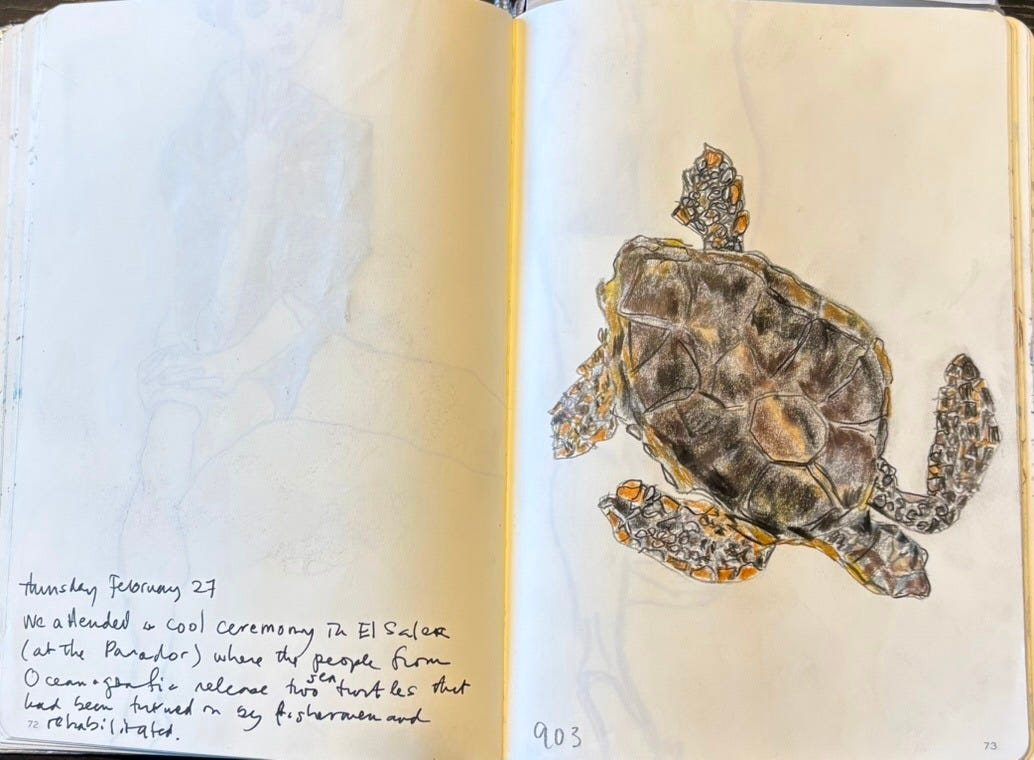
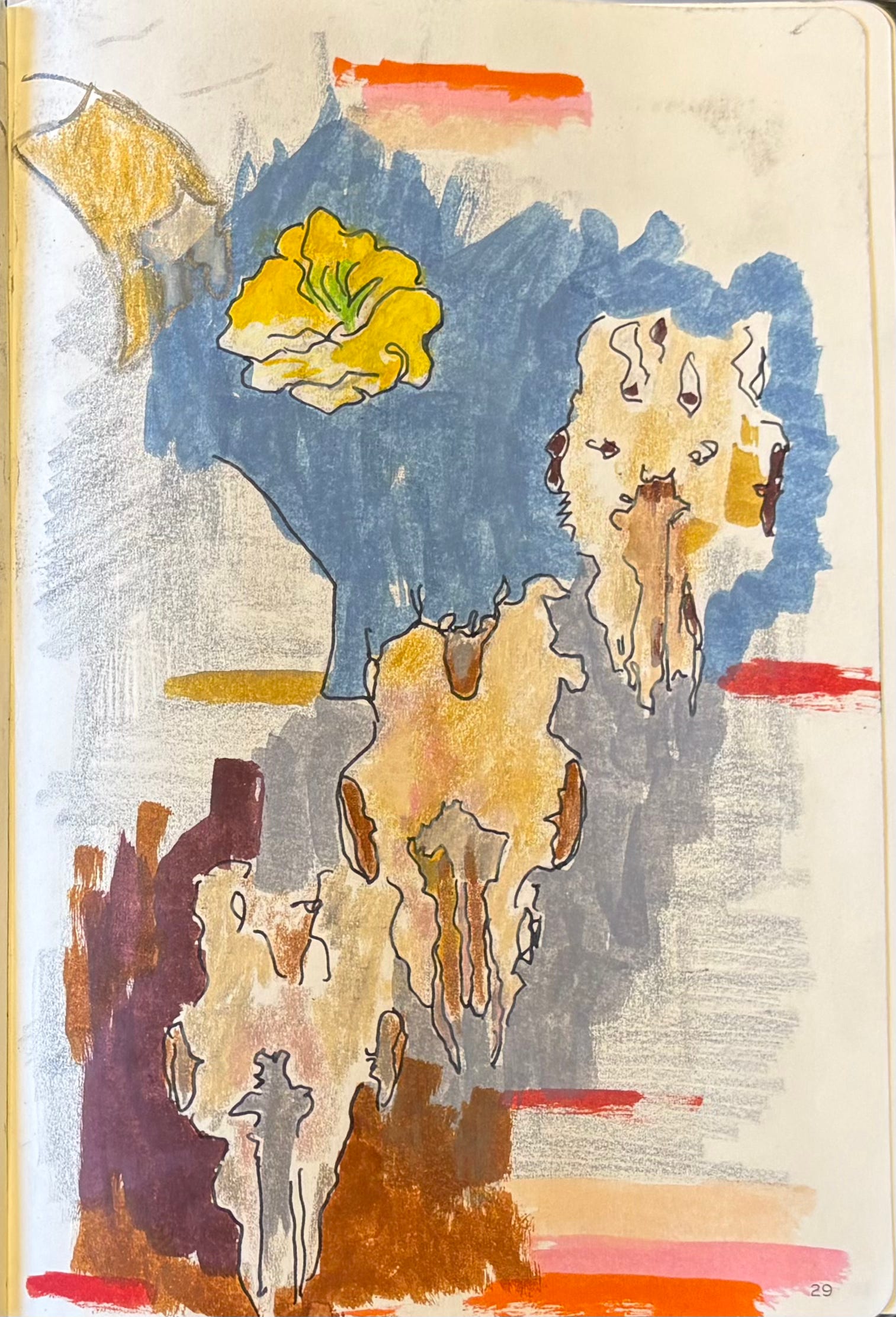
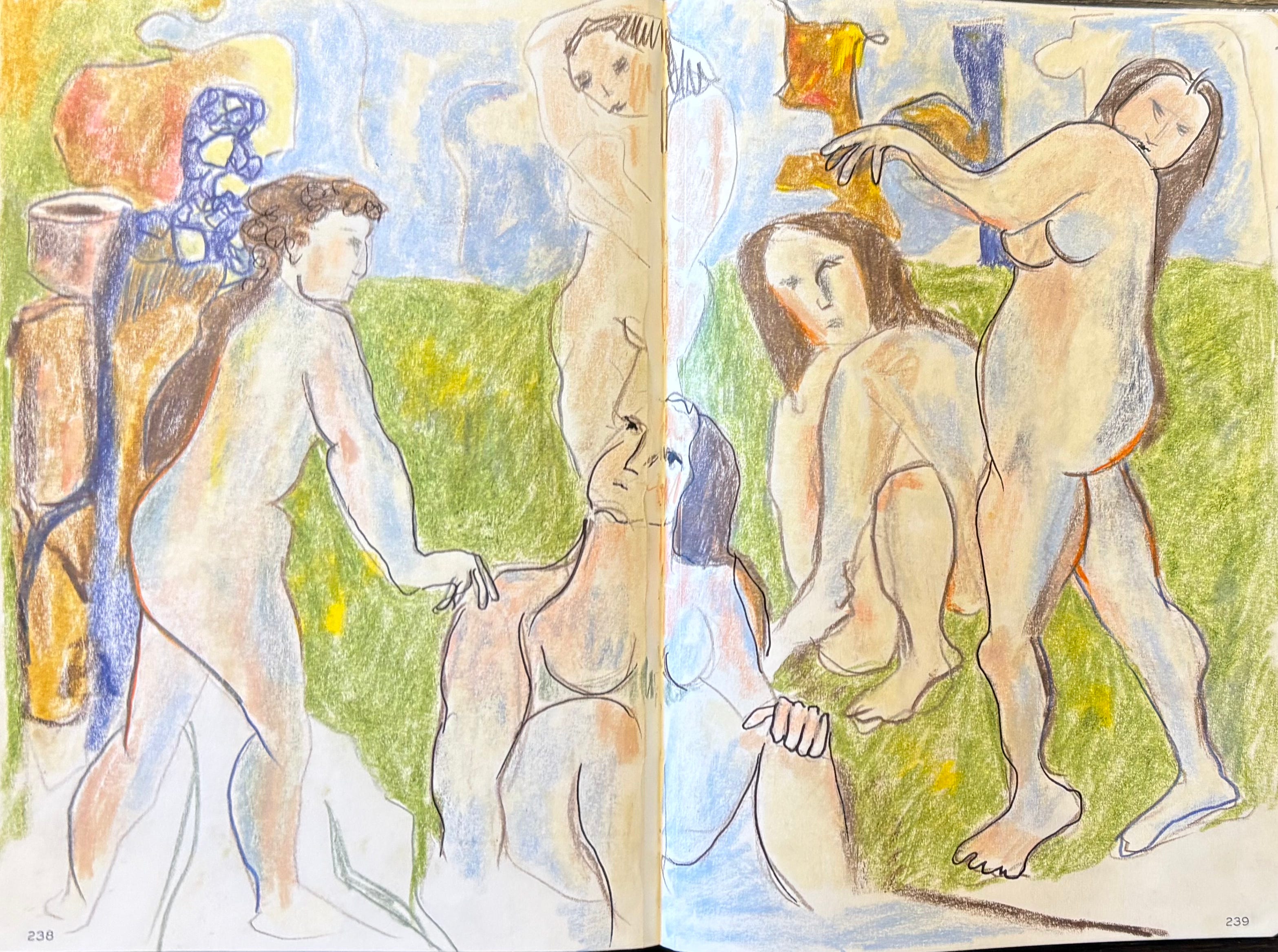
During my early (still unpublished) novel writing years, I read Working Days: The Journal of the Grapes of Wrath by John Steinbeck. He was on his second draft of the book and on an insanely creative jag and every day he wrote some notes about his progress and monumental doubts and work habits. He often included the dispatches that his source was sending him to enhance his understanding and accuracy of what was going down in the migrant camps during those dark days of the Dust Bowl and the Great Depression in California.
Another influence is this week’s guest, John Muir Laws—aka Jack—a nature journaling expert who I met at his South Bay home in the summer of 2025. The birdlife in his suburban backyard was off the charts as we talked. Jack has written a number of books about nature drawing as well as blank journals (for you to fill up with great instructional ideas on how to sketch flora, fauna and landscapes). He also conducts workshops throughout the world. It’s part of a growing international nature journaling movement that is fundamentally about observation, reflection, caring for what you love and growing as a person. The planet won’t survive without us fighting for and defending the places we love. Nature journaling is an easy entry point.
Your notebooks and journals are for you, and I encourage you to make them as multidimensional as possible. If I only had one with a multitrack tape recorder in it! I want to use my hands and feel the pages and be able to turn them and suddenly listen to a recording, say of a band parading down the street in Valencia, some song seed I want to remember or the cry of the red shouldered hawk that lives in the neighborhood. The phone is extremely useful but I’m of a tactile generation and want to experience what I am creating with my hands.
I’ve seen some really impressive notebooks over the years. I plan to fill a lot more myself before it’s all said and done. Until then they’re indispensable. Then maybe I’ll burn them.
In addition to listening to the new episode, check out the video for my song “Gratitude” based on Episode 15 guest, Hal Mayforth’s notebooks, who has maintained a morning journaling practice for at least 4 decades.
Get cracking.
All for now.