
The Creative Generalist
Some Thoughts on the Plight of the Polymath.

“The generalist’s brain is an open faucet, but time is a narrow bucket.” — Mihaly Csikszentmihalyi
The idea of being a generalist sounds noble enough, like being a Renaissance artist or a honeybee. But the essence of being a polymath, in my experience, is the nagging feeling that you’re forever behind. There is always a stack of books to read, a guitar lick that can open a new pathway, a painting to interpret to see if you can add to your quiver. When you’re not practicing, you’re playing catch-up.
In truth, polymaths are hoarders of skillsets. We are born to play, rarely content to watch from the sidelines. We are often quick studies, fast out of the gate and equally fast to bump up against the wall that leads to incremental progress. We breathlessly overestimate our capabilities, leaving trails of work that will not and probably never should see the light of day.
Welcome to the Land of Unfinished Business.
Generalists are difficult to categorize—even by ourselves—leaving us with an uneasy association with “expertise.” That impostor syndrome shadowing us is the core of our obsessive nature, our addiction to the next illuminated path.
What was it that Leonardo da Vinci apparently said on his deathbed? “I have offended God and humanity because my work did not reach the quality it should,” or, depending on the translation, “because I didn’t do enough with my time.” That is rather depressing if you choose to take it that way, which you probably should.
But what is a Renaissance junkie to do? Shake the inner critic off your wings, go back to studying geology and the principles of falling water, throwing masquerade balls where mechanical doves fly out of cakes, designing catapults and deep sea diving equipment, and dissecting the musculature of the human smile.
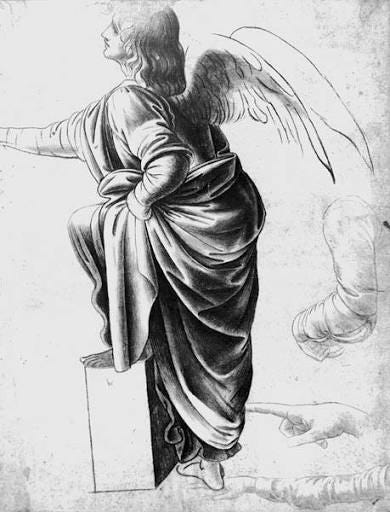
Leonardo taught us many things, among them the occasional need to finish. He couldn’t compete quantitatively with the output of many of his peers. But he made up for it in both the quality of the works he deemed complete (some took a lifetime) and his refusal to let the confines of time dilute the vastness of his curiosity and talent. His dying lament might seem a tad overdramatic, but who can doubt the grievous effort?
The ultimate crucible for creatives is the trial period where our imaginations (and perhaps ambitions) outpace our untrained capabilities. It is what Ira Glass famously called the “Taste Gap.” As a beginner, your taste may be excellent. You can perceive perfection but you can’t yet replicate what’s in your mind. Artistic and intellectual progress requires moving past the “Taste Gap” through the difficult, often unromantic gauntlet of completion.


At some point you must ask yourself: How bad do I want this? How far am I willing to go to break through resistance—fear, self-doubt, boredom, lack of god-given ability—in pursuit of steady improvement? Why should I keep going when only rejections are pouring in, when inspiration becomes a chore, like scrubbing the bathroom with a tooth brush?
Hopefully with practice you learn to finish what you start, which includes knowing when to stop. In the act of finishing we find our own reliable systems (creative processes).
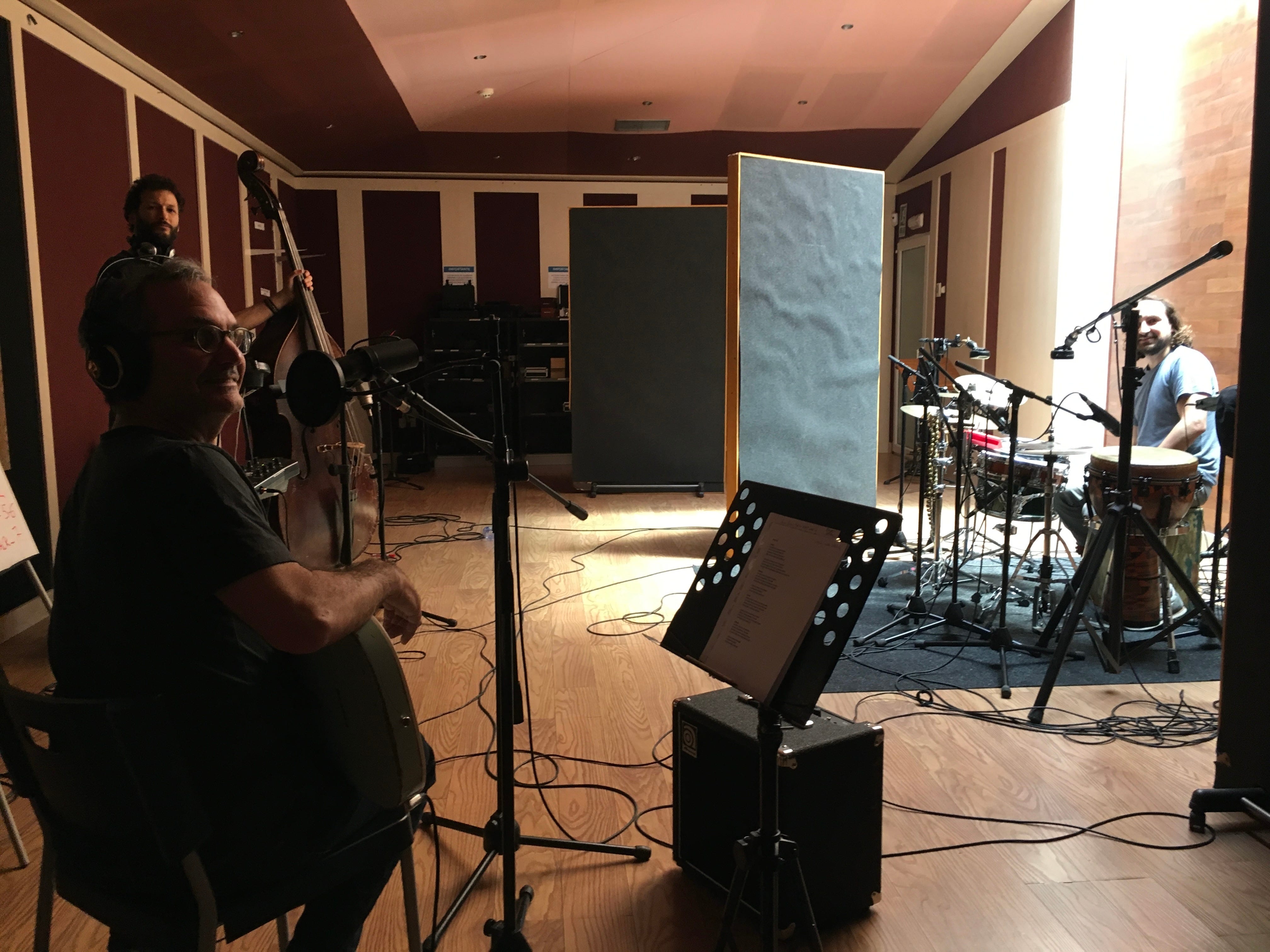
If time flows linearly through a narrow bucket, the beauty of life is that it is cyclical and elliptical. There is no predictable amount of time to find out if you can close the gap between imagination and execution. But I would like to think that over a lifetime, we can become reasonably accomplished across multiple, interweaving pursuits like art, writing, music and gardening, to name a few.
We can look at an apple, for example, and paint a woman examining it like an existential object. Or write a song about the apple of a lover’s eye. Or craft a novel about a doctor who lives on an apple farm in a time of unfolding apocalypse. Or actually grow antique apple varietals, defending the orchard against worms, birds, and bears.
You just might want to address them one at a time.
In many ways the Unfinished Business of our creative lives is what makes the cracks in our bells. It makes us the complex beings we are, alive in a world of miraculous pursuit, delivering some of our most lasting lessons. It should never keep us from starting the next adventure. You never know when an old obsession is going to make its way back around.
All for now.

If you want to hear a story about the exact opposite of the creative generalist, spend an hour with the master potters of Pond Farm. Our recent Full Expression episode explores the Bauhaus tradition of Marguerite Wildenhain and the lifelong pursuit of mastering a single craft.